
 George Richards, FHN Publisher
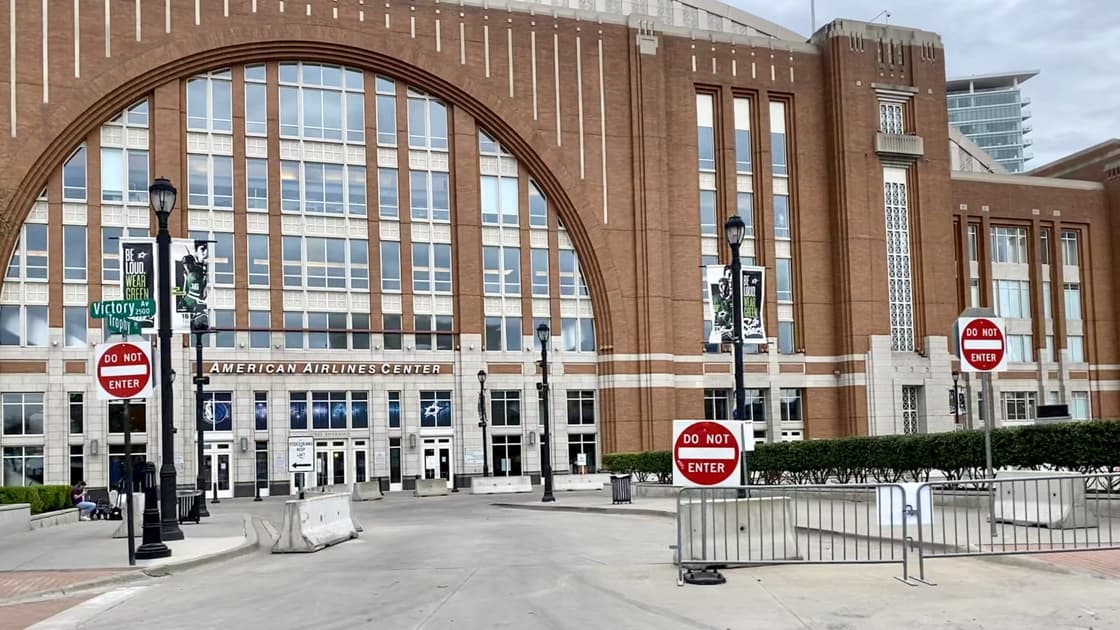
Joel Quenneville recalls waking up early on Thursday, March 12, 2020, to walk to the AmericanAirlines Center in Dallas to prep for the Panthers morning skate.
Before he got there, Quenneville says, the NHL sent word that all practices were cancelled as a precaution due to the spread of the COVID-19 virus.
More cancellations were to come.
A year ago today, the NHL not only canceled those practices but told their teams their seasons were being put on hold.
The NHL put its season on pause, hoping to pick back up in a couple weeks if the spread of the virus was to slow.
We all know how that turned out. Those weeks turned to months.
“I thought it was going to be short-term as well, I remember some of the speculation,” Quenneville said.
“We were coming off a big win in St. Louis and were walking to the rink in Dallas for the morning skate all ready to go and was told practice was off, the game eventually canceled.
“Then we were waiting for the next day’s news. The whole world was going through something unthought of and we’ve been dealing with it since.”
The week started off great for the Panthers.
On Monday, the went to St. Louis and, thanks to a tremendous defensive effort and a terrific game by goalie Chris Driedger, the Panthers beat the defending Stanley Cup champs 2-1.
The next day, the team flew to Dallas and bussed to the practice rink for what would be a high-energy workout.
Following practice, Quenneville as well as Driedger, MacKenzie Weegar and Sasha Barkov spoke to the small number of media in town to cover the team.
Instead of opening up the locker room as usual, new NHL guidelines were put in place because of the threat of quick-spreading virus.
The team set up a backdrop on the far wall of the practice facility near the door leading to the busses. A retractible belt was to separate the four reporters from the coach and players who came by one-by-one.
The players and coach stood against the wall as reporters stood six feet back, shouting questions over the din of shots being fired on the ice just a few yards from this makeshift press room.
Everyone appeared to be in a good mood although there was a sense of nervousness.
News had already gotten out that teams like Columbus and San Jose were being forced to play games in empty arenas.
Others, perhaps even the entire league, would have to follow suit.
People were starting to pay attention to how close we were getting to one another by then.
Barkov walked up, looked at the press members behind the bank rope and pulled his shirt up to mask his face.
“You guys,” he said with a smile, “stay back there.”
On person who was not smiling was GM Dale Tallon.
When the team first arrived, Tallon stayed in the common area at the front of the facility grimly watching the news.
“This,” Tallon said quietly, “is not going to be good.’’
It most certainly was not.
The next day, Wednesday March 11, was an off day for the team.
Some went to the mall, others just walked around the downtown area taking advantage of a sunny north Texas spring day.
On Thursday, the Panthers would continue their season against the Stars.
Or so they thought.
Wednesday night, everything in the sports world changed when Utah Jazz center Rudy Gobert tested positive for COVID-19 before a game in Oklahoma City.
The Jazz-Thunder game was canceled and, soon enough, the NBA announced it was suspending its season immediately.
Some of Florida’s players were out to dinner and saw the news on televisions by the bar. Others found out through a group text or by watching TV in their hotel room.
Aaron Ekblad and Jonathan Huberdeau went to the Dallas Mavericks game at the AAC where they were scheduled to play the next day.
It was there that Mavs owner Mark Cuban was famously pictured by ESPN checking his phone and seeing the news about the league putting its season on pause once games which had started were complete.
“Guys on the group chat were like ‘what’s going on?’ I don’t really watch the news too much, so I was getting my information from the team,” Keith Yandle said.
“There was talk the game in Dallas might not happen, might get pushed back a couple of days. We know what ended up happening. It was definitely some uncertain times. I can’t believe it was a year ago. We thought it would be a day or two, maybe a week.’’
Ekblad and Huberdeau headed back to the team hotel where a bunch of their teammates were hanging out.
The conversation was focused on what would come next.
If the NBA was putting its season on hold, the players figured, certainly the NHL would do the same.
“We were all sitting on a patio near the hotel and chatting about what the future might hold,” Ekblad said.
“We were all putting our two cents in while not knowing a thing about what would transpire the next day much less the coming weeks, months, year. It was a guessing game.
“But it was pretty obvious the NHL was going to follow suit. The message from the team was ‘prepare to play,’ but we had a pretty good idea what was going to happen.”
The next morning, the team was told not to bother going to the arena for the morning skate.
Although the league would not officially announce anything until the afternoon, it sent word to teams that all practices and meetings were to be called off.
Florida’s equipment staff was already at the Dallas arena packing things up, getting ready for a much earlier flight back to Fort Lauderdale than originally scheduled.
By mid-afternoon, the league made it official: The NHL would be on hiatus for the immediate future.
The Panthers-Stars game, as well as everything else, was off.
No one thought the break would be as long as it was or, that a year later, we would still be living under Covid-19 related restrictions.
“Everyone was saying ‘two weeks, two weeks, two weeks.’ That’s what we kept hearing,’’ Ekblad said. “I felt like it would be much longer.”
For the next few weeks and months, players were restricted from doing much of anything. The league ordered facilities closed and told players to stay home like everyone else.
Barkov got a pair of inline skates so he could try and replicate being on the ice through his Boca Raton neighborhood.
Some players stayed local and locked down in South Florida.
Others like Huberdeau (Montreal) and Anton Stralman (Finland) eventually left and headed home.
By summertime, the NHL announced it would resume play and the Panthers would be part of an extended postseason.
The team reported to Coral Springs for a special summer camp in July before flying to Toronto and join the NHL bubble.
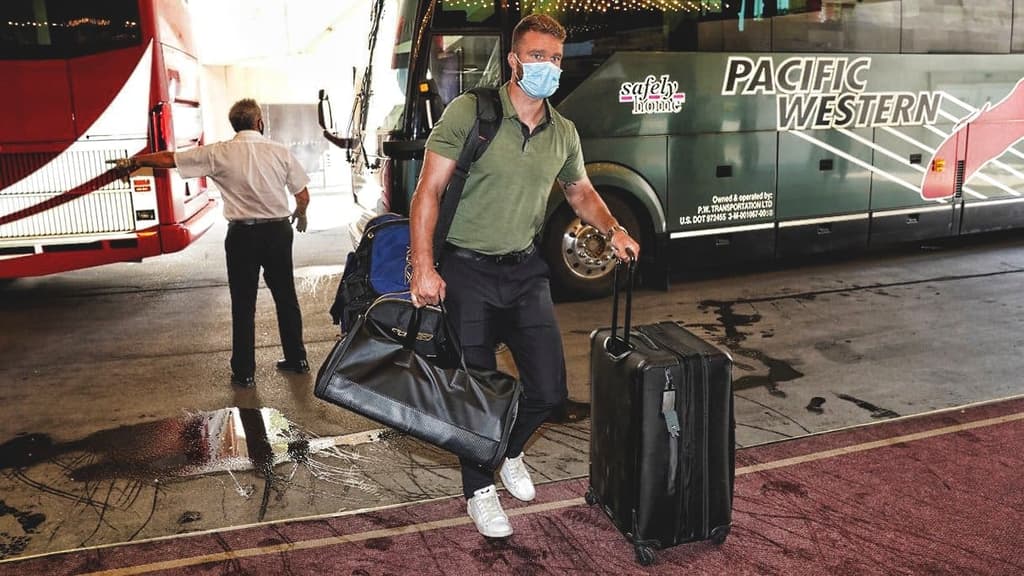
Florida was knocked out of the Stanley Cup playoff qualifier in four games by the Islanders and flew back to Lauderdale that very day.
This time, their season really was over.
And, much has changed around the organization since.
Tallon was let go after a decade with the team.
Free agents Mike Hoffman, Evgenii Dadonov, Brian Boyle, Mark Pysyk and Erik Haula (among others) were allowed to walk away.
Mike Matheson and Colton Sceviour were traded to Pittsburgh by new GM Bill Zito.
A year later, the Panthers look a lot different than they did that afternoon in north Dallas.
“It has been an interesting year when you reflect back on it,” Quenneville said.
Things are starting to get back to normal — the Panthers played in front of a crowd in Columbus on Tuesday and Thursday after that building was empty for their first visit in January — ever so slowly.
“Things aren’t back to normal but it’s that old cliche’ of ‘the new normal’,” Ekblad said. “I don’t feel burdened by it one bit. It is what it is.
“We’re still a fortunate group of individuals who get to do what we do every day so you’re not going to hear any complaints out of me.
“I saw something today on Instagram, I think it was the Texas Rangers, who will have full capacity for Opening Day. So that gives me hope. New York is allowing fans again, Tampa is, we are. It’s exciting.
“We all want the world to get back to normal, we want to go to the grocery store, go to a restaurant and feel comfortable. We want our families to be safe. Now vaccines are coming along. It has been a long time coming, but we’re on the back side of this now.”