
 George Richards, FHN Publisher
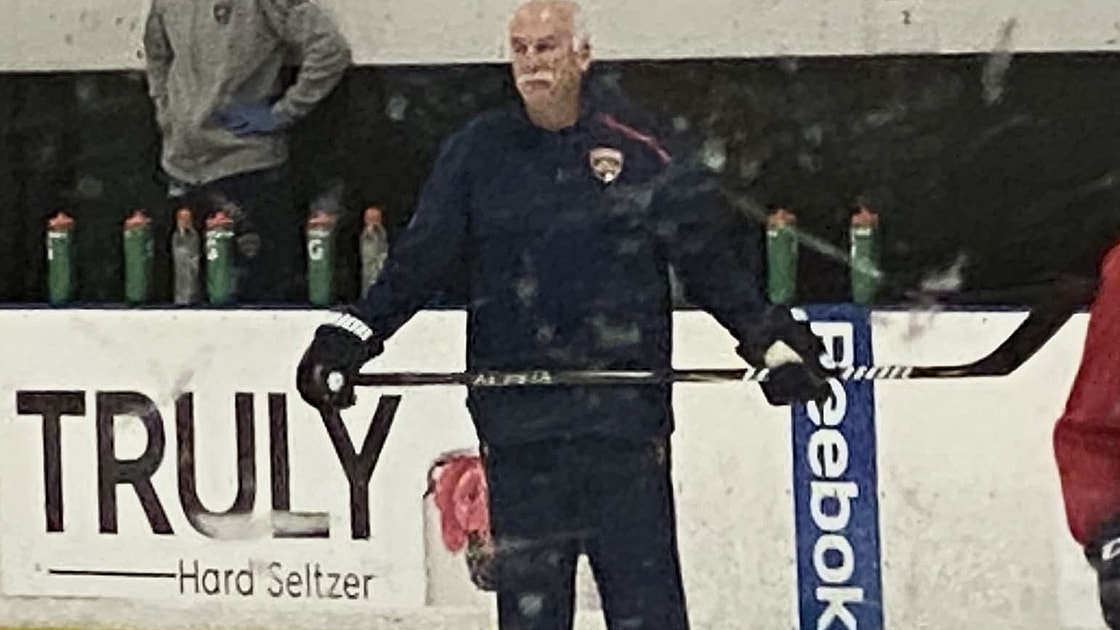
A good number of Florida Panthers stuck around in South Florida during the NHL’s break from play, but many got out of town and headed home.
Those players who came back returned to a COVID-19 hotspot.
Although the team is taking every precaution necessary in trying to keep players, coaches and their staff as safe as possible, there is no ignoring what is going on in the community the team calls home.
On Thursday, the Florida Department of Health said there were almost 14,000 new COVID-19 cases in state — which, according to the Miami Herald — is the second highest single-day total since the pandemic began in March.
Florida has a total of 315,775 confirmed cases.
Players for the Florida Panthers have been asked numerous times about the uncertainty which comes with living and working in a region hit hard by the coronavirus.
They do not seem to have much of a concern.
The precautions taken by the Florida Panthers’ medical staff has them feeling safe moving forward.
“The environment here, at the practice rink, is really safe,” captain Sasha Barkov said. “Our trainers and all the guys here are taking things very seriously. They have prepared everything so nothing bad will happen here.
“We all know the rules. We don’t need to go hang out in Miami right now. We just need to stay home as much as possible, order food or make your own. Practice is a hard-enough activity for the day. Just go home afterward and rest, get ready for the next day.’’
In a few weeks, the team is scheduled to load up and fly to Toronto where they hope to set up shop for the next couple of months.
The entirety of the Eastern Conference playoffs — save for the finals — will be played in a highly-controlled atmosphere in Toronto, Ontario, where the virus appears to be contained.
The Panthers are scheduled to travel to Toronto around July 26 and play an exhibition against the Tampa Bay Lightning July 29 at noon.
Both the Panthers and Islanders will be headquartered at the Royal York in downtown Toronto, a few blocks from the Maple Leafs’ Scotiabank Arena.
For Noel Acciari, whose wife gave birth to the couple’s first child just last week, going away for an extended period of time during a pandemic could not have been an easy choice.
“It was a big decision. Bringing in a new child … my wife and I talked about it and this, you know, is our job,’’ Acciari said on Monday.
“We’re paid to be here and our ultimate goal is to win the Stanley Cup and to have the opportunity to play for it is something special and you don’t always get the chance. It is going to be tough to Greyson for, potentially, the first two months of his life. But if we bring back the Cup, it will all be worth it.”
Players who have been working out at the team facility in Coral Springs prior to Monday’s start of training camp had already been subjugated to the new rules in what has become a new normal.
The team already has its own entrance in the back of the facility. Upon entry, they are given temperature screenings and follow social distancing rules whenever possible throughout the building.
Those allowed into the inner sanctum — players and staff alike — are required to wear masks wherever they go save for when they head out onto the ice.
“We have to be smart about things,” coach Joel Quenneville said. “Look at the world we have been in … we know how we’re going to proceed. Florida has become a hotspot but we have done job.
“Guys who have been skating here before cannot say enough good things about how our training staff has looked after them. They have followed protocols and the players have followed all that as well.
“It is not an easy process. It is a whole new world just coming into the rink. You have to adapt every day. The guys have done that, followed the protocol and they deserve a lot of credit for that.”
Florida’s equipment staff has been extremely busy disinfecting not only the stuff players wear — but anything they may come into contact with.
Interactions with the local media, which usually meant interviews in the locker room and in a small back room near the entrance to the facility, are now done remotely over a video link.
Tests for the coronavirus come on a daily basis.
“You’re not nervous, but it is kind of weird,” team captain Sasha Barkov said. “You have to wear a mask in the locker room, walk around with a mask. But everyone knows why and everyone is taking it serious. We’re all just really happy to be back, see each other again.”
Four days into summer training camp (the team took Thursday off as scheduled) and no one has tested positive.
Things, by all accounts, are off to a great start in this hotspot.
“Back home [in Canada] there aren’t as many cases obviously,’’ MacKenzie Weegar said. “But our medical staff here has done a great job briefing us on what we need to do to stay safe. We have the masks, have been social distancing and all that.
“I think we’re all pretty comfortable around the rink. Everyone is staying safe. We’re not too worried about the COVID stuff outside the rink. We’re doing what we have to do right now.”
For players such as Barkov, who stayed in South Florida since the team returned from Dallas on March 12 when the NHL put its season on hold, there were no flights to worry about nor travel concerns.
Other players like Erik Haula, Chris Driedger, Jonathan Huberdeau and Weegar left during the long pause.
As the cases continued to rise in South Florida, there was definitely some trepidation to coming back.
“Worry is a pretty strong statement,” said Haula, who rode out the break in Las Vegas. “It is all on us to do the best we can to prevent exposure. This thing is kind of crazy and we don’t know everything but we’re trying to do the best we can with what we know. Hopefully everyone keeps taking care of themselves and it all goes well.”
Veteran defenseman Anton Stralman told The Athletic in May that he questioned returning after traveling home to Sweden.
“I think you should be concerned,” said Stralman, who was diagnosed with bronchiectasis while with the Rangers. Stralman had been suffering from chronic pulmonary infections throughout his career before they found out what had been causing it.
“There are so many ways to look at this thing. I know everybody wants hockey back, but safety has to come first. And it’s a little bit worrisome, I can’t deny that. Even though most players are young and healthy, I’m sure there are players like me that have underlying health issues. I don’t know how my body will react if I get this virus.”
Stralman, like the rest of the Panthers expected back, did return and has participated in each of the first three practices.
One team member who opted out was not a player but assistant coach Mike Kitchen. Last summer, he said he took time off after being fired by the Blackhawks in 2017 because he was dealing with a family illness.
Monday, the team said Kitchen would not be rejoining the Panthers.
“It was a difficult decision to say the least,” Kitchen said in the release, “but the right decision for me and my family.”
Monday, at the start of training camp, Quenneville said he gathered his team up and continued the message of everyone doing what they can to stay safe.
Players have been advised against gathering in large groups, going out on the town on their own.
Quenneville said he was confident his players are doing what they can to stay safe not only for themselves and their family, but for one another.
“We had the medical staff talk to them and then the coaches and players talked,” Quenneville said. “Our priority is for their safety and their health. … Be mindful of that not only when you’re at the rink, but when you are away from it as well.’’
A player who contracts the virus could not only affect themselves and ones around them, but could infect teammates and throw a wrench into the plans of the team moving forward.
“We talked as a team and we’re all big boys and we have to be smart,” Acciari said.
“It is not only affecting yourself, but 25 other guys. Our of respect for your teammates, you have to be smart. Yes, we have to go to the grocery story, but you have to be careful and maybe not go out to eat. Think about the next two weeks, enjoy your families.
“Things are spiking again. We did so good the past few months, what is another few weeks? As a team, we all respect each other enough and are focused on going to the rink and then going home.”